In short (TL;DR)
- What it is: software DPF deprogramming – the ECU no longer requires the filter or runs regeneration.
- What we do: the software part only. Physical removal is carried out by our partner workshop in Vilnius.
- Price: from €50. Currently running: DPF + EGR for €50.
- For what: diesel cars of all makes. The work is determined by ECU type and engine code, not the badge.
- Legal position: it does not meet the requirements for cars used on public roads. We provide it for motorsport, closed circuits, export, off-road and agricultural machinery.
- We do not promise a roadworthiness pass – since 2023 particle-number measurement detects a removed filter.
- Diagnostics first. If the problem is mechanical (pressure sensor, injectors, turbocharger), software will not solve it.
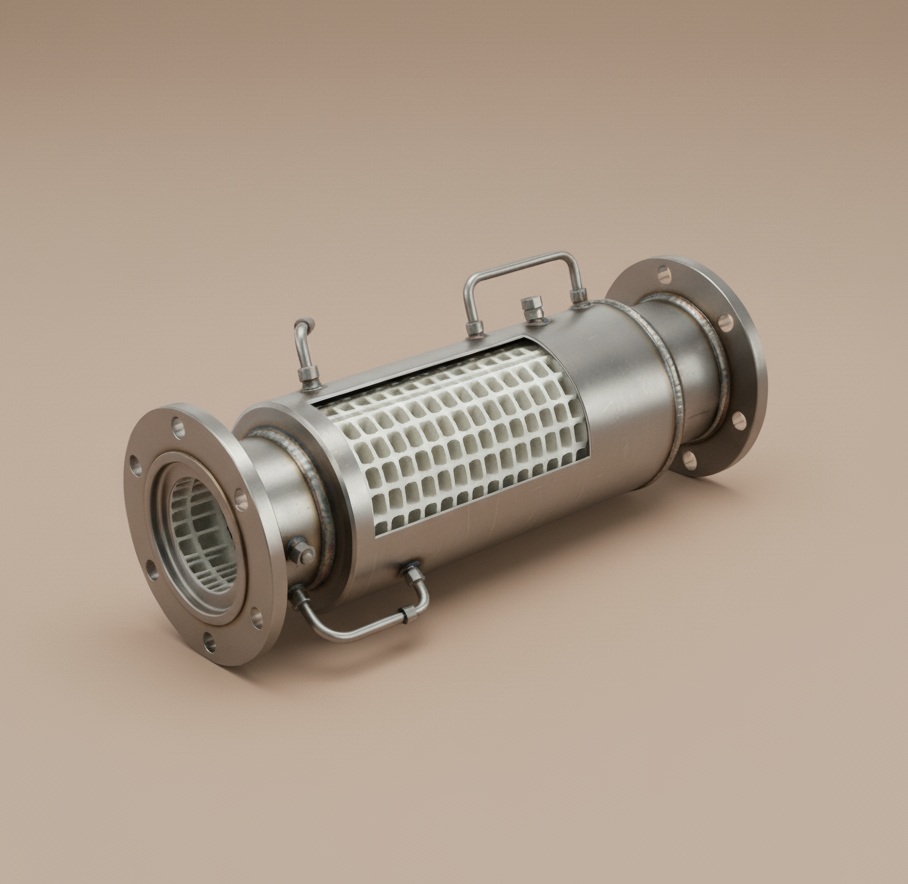
Software DPF (diesel particulate filter) deprogramming for diesel cars of every make. We individually adjust the engine control unit (ECU) software so the system no longer demands filter regeneration and no longer drops into limp mode because of a blocked filter.
Important, about scope. We do the software part. Physical filter removal is carried out by our partner workshop in Vilnius – see DPF removal and catalytic converter cutting. These are two different jobs requiring different equipment and different expertise. That is why the price is quoted separately: our price from €50 covers the software work, not the job end to end. When you see competitors quoting €150–200 for "everything", that figure normally includes both stages.
When DPF deprogramming is needed
- The DPF or engine warning light is on, and diagnostics show filter pressure or temperature sensor faults
- The car periodically drops into limp mode with reduced power
- Regeneration happens more and more often – every few hundred kilometres, and in extreme cases every 35–40 km
- Engine oil level is rising and the oil smells of diesel – a consequence of failed regenerations, not a separate problem
- Lost power, higher fuel consumption, smoke
- The car is used mainly in the city on short trips, so the filter never gets hot enough for regeneration to complete
Why a blocked filter should not be ignored
Failed regenerations are not just an inconvenience. During regeneration extra fuel is injected into the cylinders to raise exhaust temperature. If regeneration is repeatedly interrupted, some of that fuel drains into the sump and dilutes the engine oil. The oil level rises and its lubricating properties fall.
On some engines this ends very concretely. On the Ford EcoBlue (Transit, Transit Custom), diluted oil accelerates wear of the wet timing belt; belt debris then blocks the oil pump pickup, after which the engine can lose lubrication entirely. On the Mazda Skyactiv-D 2.2 and the Hyundai/Kia R family, oil dilution is equally well documented. It is a chain that runs from a non-functioning filter to an engine rebuild – which is why a DPF problem is worth addressing sooner rather than later.
Four possible solutions
| Solution | What it involves | How long it lasts | Who does it | When it fits |
|---|---|---|---|---|
| DPF cleaning / washing | Filter is removed and washed, the system stays original | Temporarily – the filter stays on the car and loads with soot again | Other workshops | Filter not yet damaged, you want to keep the original system and drive on public roads |
| New DPF filter | Original or aftermarket unit plus sensors | Until it blocks again | Other workshops | Car under warranty, or nearly new |
| Software deprogramming | ECU software adjustment – regeneration is no longer demanded | Permanently removes the regeneration cycle | Us | See the section on roadworthiness testing – this service is not intended for public-road use |
| Physical filter removal | Filter internals removed, housing welded shut | Permanently | Our partner | Together with the software work; see the section on roadworthiness testing |
For comparison: a new original DPF costs roughly €500–3000 depending on the model, so on most older cars replacement no longer makes economic sense.
Engines we cover
The software work depends not on the badge but on the ECU type and the exact engine code. That is why we always establish the engine code first – make and model alone are not enough.
BMW
BMW diesel control units are called DDE. Bosch EDC16 corresponds to DDE 6.x, and EDC17 / MEDC17 to DDE 7.x.
| Engine | Years | Chassis | ECU / DDE | AdBlue |
|---|---|---|---|---|
| M47 / M47TU 2.0d | 1998–2007 | E46, E39, E60, E83 | — | No |
| M57 / M57TU 2.5–3.0d | 1998–2013 | E39, E46 330d, E53 X5, E60/E61, E65/E66, E70, E83, E90 335d | DDE 4.0 / 5.0 / 6.0 / 7.3 | No |
| N47 / N47TU 1.6–2.0d | 2007–2014 | E81/E87, E90–E93, F20, F30, E84 X1, E83 X3, F10 520d | EDC17 – DDE 7.0 / 7.1 | No |
| N57 3.0d | 2008–2019 | E90 325d/330d, F10/F11, F01/F02, F25 X3, E70/F15 X5, E71/F16 X6 | MEDC17 – DDE 7.x | From Euro 6 |
| B47 2.0d | 2014– | F20/F30/F32, F48 X1, G20, G30, MINI F54/F56/F60 | MEDC17 – DDE 7.x | From B47TÜ1 (November 2017) |
| B57 3.0d | 2015– | G11, G30, G20 330d, G01 X3, G05 X5, G07 X7 | MEDC17 – DDE 7.x | Yes |
A separate note on the N47: this engine''s timing chain sits at the rear of the engine and is known to be problematic, particularly on cars built between March 2007 and January 2009. It is not a DPF fault, but replacing the chain requires removing the engine. Before investing in DPF work it is worth checking whether the chain has already been changed.
VW, Audi, Škoda, SEAT
| Engine | Codes | Years | Models | AdBlue |
|---|---|---|---|---|
| 1.9 TDI PD | BXE, BLS, BKC | 2003–2010 | Golf V, Passat B6, Octavia II, A3 8P, Leon II, Fabia | No |
| 1.6 / 2.0 TDI (EA189) | CAYA, CAYB, CAYC, CBAB, CFFB, CFGB, CLCA | 2008–2015 | Golf VI, Passat B6/B7, Octavia II, A3 8P, A4 B8, Q5, Superb II, Leon II | Mostly no |
| 2.0 TDI (EA288) | CRLB, CRMB, CUNA, DFEA, DFFA | 2012–2024 | Golf VII, Passat B8, Tiguan II, Octavia III, Superb III, A3 8V, A4 B9, Q5 FY | Yes (Euro 6) |
| 3.0 TDI V6 | CASA, CCWA, CDYA, CJMA | 2004– | A4, A6, A7, A8, Q5, Q7, Touareg | From Euro 6 |
Note: not every 1.9 TDI PD had a DPF – BLS does, other codes often do not. This is checked per car.
PSA (Peugeot, Citroën) and engines shared with Ford, Volvo, Mazda, Mini
| Engine | Codes | Makes it was used in | System |
|---|---|---|---|
| 1.6 HDi / TDCi (DV6) | DV6TED4, DV6ATED4, DV6C, DV6D, DV6FC/FD/FE | Peugeot, Citroën, Ford (Focus, Fiesta, C-Max), Mazda 2/3, MINI Cooper D, Volvo (C30, S40, V50, V70, S80, V40), Suzuki SX4 | FAP + EOLYS additive; AdBlue only on Euro 6 BlueHDi |
| 2.0 HDi (DW10) | RHY, RHZ, RHW, RHR, RHF, RHK, DW10C, DW10F | Peugeot, Citroën, Ford (Focus, Mondeo, Kuga, S-Max), Volvo, Suzuki, Fiat Scudo, Toyota (as 4WZ) | FAP + EOLYS; BlueHDi AdBlue from 2014 |
Ford
| Engine | Years | Models | ECU / notes |
|---|---|---|---|
| 1.8 TDCi (DLD-418 "Lynx") | 2001–2012 | Focus, Mondeo Mk4, C-MAX, Galaxy, S-MAX, Transit Connect | Delphi common rail |
| 2.0 / 2.2 TDCi "Puma" (ZSD) | 2000–2021 | Mondeo Mk3, Transit 2006–2016, Ranger T6, Land Rover Defender, Jaguar X-Type | Ford''s own design, chain driven |
| 2.0 / 2.2 TDCi (PSA DW10/DW12) | 2004–2015 | Focus, Mondeo Mk4, S-Max, Galaxy, Kuga | PSA design, belt driven |
| 2.0 / 1.5 EcoBlue | 2016– / 2017– | Transit, Transit Custom, Focus Mk4, Kuga, Ranger, Fiesta, Puma | Continental SID212; DOC+DPF+SCR, AdBlue |
Volvo
| Engine | Codes | Years | Models | ECU |
|---|---|---|---|---|
| D5 2.4 (5-cyl) | D5244T … D5244T22 | 2001–2017 | S60, V70, XC70, XC90, S80, XC60 | Bosch EDC15 / EDC16 / EDC17 |
| D3 / D4 2.0 (5-cyl) | D5204T … D5204T7 | 2010– | S60, V60, XC60, V70 | Bosch, CP4 pump |
Other makes
| Make | Engine / codes | Models | Notes |
|---|---|---|---|
| Mercedes-Benz | OM651 1.8 / 2.1 (2,143 cc); OM642 3.0 V6; OM646 2.2; OM654 2.0; OM656 3.0 | C (W204/W205), E (W211/W212/W213), GLK, A and B-Class, ML/GLE (W164/W166), S (W221/W222), Sprinter, Vito | OM651 built from 2008: piezo injectors, Euro 5, Euro 6 from 2010; mounted both longitudinally and transversely. The 163, 170 and 204 PS versions use a two-stage bi-turbo setup, lower outputs a single turbo. Side issues, not DPF faults: OM651 injectors and the rear-mounted timing chain; OM642 – oil cooler seal and swirl flaps (P2015) |
| Opel | 1.7 CDTI (Z17DTH, A17DT); 1.9 CDTI (Z19DT/DTH); 1.6 MDE (B16DT*); 2.0 CDTI | Astra H/J/K, Zafira, Vectra C, Insignia, Meriva, Combo, Mokka | 1.7 – Isuzu sourced, EDC16C9; 1.9 – Fiat design; 1.6 MDE – AdBlue from September 2015 |
| Fiat, Alfa Romeo, Lancia | 1.3 MultiJet; 1.6; 1.9 JTD / 16v; 2.0; 2.3 (Ducato) | Punto, 500, Doblo, Bravo, 147, 156, Ducato | 1.3 = Opel 1.3 CDTI = Suzuki 1.3 DDiS; 1.9 JTD = Opel Z19DT and Saab |
| Renault, Dacia, Nissan | K9K 1.5 dCi; M9R 2.0 dCi; R9M 1.6 dCi; YD25DDTi 2.5 | Mégane, Kadjar, Logan, Sandero, Duster, Qashqai, X-Trail, Juke, Navara, Pathfinder | K9K also used by Suzuki and Mercedes (OM607/OM608); ECU – Delphi, Continental or Bosch depending on output |
| Hyundai, Kia | D4FA 1.5; D4FB 1.6; D4FD 1.7; D4HA 2.0; D4HB 2.2 CRDi | i30, i40, ix35, Tucson, Santa Fe, Ceed, Sportage, Sorento, Soul, Venga | Oil dilution from frequent regenerations is reported on the R family (2.0/2.2) |
| Toyota, Lexus | 1AD-FTV, 2AD-FTV, 2AD-FHV; 1KD-FTV, 2KD-FTV; 1ND-TV 1.4 | Avensis, RAV4, Auris, Corolla, Verso, Yaris, Hilux, Land Cruiser, Lexus IS 220d | The 2AD-FHV (D-CAT) uses a DPNR system rather than a conventional DPF; a normal DPF appeared on 1AD/2AD-FTV from around 2009–2010 |
| Mazda | Skyactiv-D 2.2 (SH-VPTS), 1.5; MZR-CD 2.0/2.2 (R2AA) | Mazda6, Mazda3, CX-5, CX-3, Mazda2, CX-7 | Skyactiv-D – well-known oil dilution from failed regenerations; MZR-CD derives from Ford Duratorq |
| Honda | N22A i-CTDi; N22B i-DTEC; N16A 1.6 i-DTEC | Accord, CR-V, Civic, FR-V, HR-V | Denso management |
| Mitsubishi | 4N13 1.8; 4N14 2.2 DI-D; 4M41 3.2; 4D56 2.5 | ASX, Outlander, Lancer, Eclipse Cross, Pajero, L200 | 4N13/4N14 – Denso, NOx trap rather than AdBlue |
| Subaru | EE20 2.0D | Legacy, Outback, Forester, Impreza, XV | The only mass-produced boxer diesel; DPF and turbo issues, especially before late 2010 |
Two cases where the model name alone is not enough
The Ford 2.0 and 2.2 TDCi are two entirely different engine families. In the Transit, Ranger and Land Rover Defender it is Ford''s own chain-driven "Puma" (ZSD). In the Freelander 2, Range Rover Evoque, Discovery Sport and Mondeo Mk4 it is the PSA DW12 with a belt-driven timing system. It is not only the timing drive that differs, but the exhaust after-treatment strategy too.
Volvo D3, D4 and D5 are trim levels, not engine codes. An example from 2016: the XC60 AWD "D4" is the five-cylinder D5244T21, while the front-wheel-drive XC60 of the same model year badged "D4" is an entirely different four-cylinder D4204T, jointly developed by Ford and PSA. Different ECU, different exhaust system. This is why we always confirm the engine code rather than the trim level.
Mercedes badging states output, not the engine. The same OM651 hides behind several designations: x180 is 120 PS, x200 is 136 or 143 PS, x220 is 163 or 170 PS, and x250 is 204 PS. In the A and B-Class the 1.8-litre versions are badged A180/B180 (109 PS) and A200/B200 (136 PS). The practical consequence: the 163, 170 and 204 PS versions run a bi-turbo setup while lower outputs use a single turbo, so the scope of work differs. "C220 CDI" alone does not tell you which version you have – we confirm it from the engine code.
The PSA EOLYS additive – why it matters
Peugeot, Citroën and some of the Ford and Volvo engines shared with them use a FAP system with the EOLYS additive – a cerium-based fluid in a separate tank, dosed automatically when you refuel. The additive lowers the soot burn-off temperature from roughly 600 °C to 450 °C, which makes regeneration possible even in city driving.
The practical consequence: the tank lasts roughly 80,000–120,000 km, and after a refill the ECU must be reset with diagnostic equipment. If that is skipped, the car reports false DPF messages and regeneration faults even though the additive has just been topped up. This is a common reason it looks as though "the filter has blocked again".
Roadworthiness testing and the legal position
We would rather say this plainly. Removing or deprogramming a diesel particulate filter does not meet the requirements for vehicles used on public roads. A car with the DPF removed no longer complies with the emissions standard it was certified to.
Testing is also becoming more precise. In Germany, since July 2023 the emissions test measures the particle number at the tailpipe – which is exactly what identifies a removed filter. Workshops in Latvia already use measuring equipment of the same class as that used at roadworthiness testing. In Lithuania it is likewise reported that since 2013 it has been effectively impossible to pass roadworthiness testing with the DPF removed.
We therefore provide this service for vehicles and machinery not used on public roads: motorsport, closed circuits, export, off-road and agricultural equipment. If a car is used on public roads and needs to pass testing, the appropriate solution is cleaning or replacement – and we will tell you so.
Price
The software work starts from €50. The final figure depends on the ECU type and the car: newer Euro 6 control units require more work. Currently running: DPF + EGR deprogramming – €50.
Physical filter removal is quoted separately and carried out by our partner. We always run diagnostics first – if the problem turns out to be mechanical (turbocharger, injectors, EGR valve), that has to be fixed first, because software does not solve a mechanical defect.
Frequently asked questions
Is the software work enough, or does the filter also need to come out physically?
The software work changes what the engine control unit demands of the system – the regeneration cycle stops and limp mode no longer triggers. The filter itself, however, remains physically on the car. If it is already heavily blocked, exhaust backpressure remains, so for some cars it makes more sense to do both jobs. That is precisely why we assess the condition of the filter before starting and tell you whether the software work alone will be enough or whether it is worth approaching our partner about physical removal as well. We decide per car, not by template.
Is DPF deprogramming legal?
Not if the car is used on public roads. With the diesel particulate filter removed or deprogrammed, the car no longer complies with the emissions standard it was certified to. We therefore provide this service for machinery and vehicles not used on public roads: motorsport, closed circuits, export, off-road and agricultural equipment. If the car is used on the road, the correct solution is cleaning or replacing the filter – and that is what we will tell you.
Will I pass roadworthiness testing after DPF deprogramming?
You should not count on it. Testing methods are tightening: in Germany, since July 2023, the emissions test measures particle number at the tailpipe, which identifies a removed filter. Latvian workshops use measuring equipment of the same class as that used in testing. In Lithuania it is reported that since 2013 passing roadworthiness testing with the DPF removed has been effectively impossible. We do not promise that the test will be passed, and we do not offer solutions whose purpose is to circumvent it.
Can factory settings be restored?
Yes. Before making any changes we read and save the original control unit software. If the factory state needs to be restored later – before a sale, for instance, or when returning a filter to the system – we have what is needed to do it. Worth knowing: restoring the software state does not restore a filter that has been physically removed.
Will the manufacturer or dealer notice that the system has been changed?
Most likely yes. Manufacturer diagnostic equipment reads control unit software versions and checksums, and the absence of a filter is detectable both physically and through emissions measurement. We do not suggest treating this as undetectable and we do not create that impression.
Can the work be done on a car still under warranty?
Technically yes, but you will almost certainly lose the manufacturer''s warranty on the engine and exhaust system. If the car is still under warranty we recommend going to the dealer first: a blocked DPF is quite often replaced under warranty, and that costs you nothing.
Will fuel consumption rise or power drop?
We do not promise specific percentages – those figures depend on the engine, driving style and the filter''s starting condition, so any precise promise would be irresponsible. What can be said firmly: a blocked filter increases exhaust backpressure, and repeated regenerations consume additional fuel. Removing those causes means the engine works without that artificially added load.
Will this damage the engine?
A software solution does not damage the engine in itself, but neither does it fix mechanical defects. If the car already has a worn turbocharger, leaking injectors or a failed EGR valve, DPF programming will not remove those problems and they will continue to develop. That is exactly why we run diagnostics first – if mechanical defects are found, they have to be dealt with first.
How long does the work take?
The software work is done during your visit to the workshop; we confirm the exact time after diagnostics, because it depends on the control unit type – newer Euro 6 units require more work. If physical filter removal is also decided on, that is a separate job at our partner and needs additional time.
Do you work with all makes?
Yes – the service applies to every make, because the scope of the work is determined not by the badge but by the control unit type and the exact engine code. You will find the list of engines we cover, with codes, in the "Engines" section of this page. If you do not know your engine code, we will establish it during diagnostics.