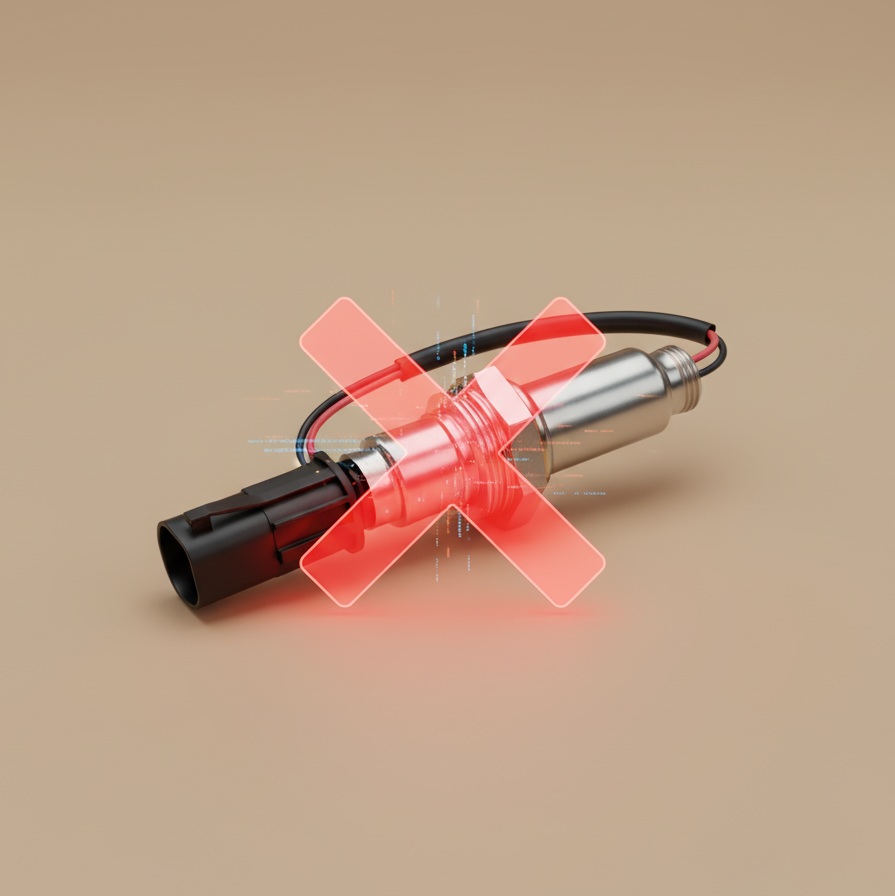
In short (TL;DR)
- What it is: lambda (O2) sensor monitoring and the related codes, e.g. catalytic converter efficiency (P0420), are switched off in the ECU software.
- What we do: the software part only. We do not physically replace or remove the catalytic converter or the sensor.
- Price: from €50.
- For what: cars whose exhaust system has been modified (sports catalytic converter, exhaust system) or where the sensor is no longer needed, and which are not used on public roads.
- Legal position: switching off the catalytic converter and its monitoring does not meet the requirements for cars used on public roads. We provide it for motorsport, closed circuits, export and off-road machinery.
- Diagnostics first: if the sensor or catalytic converter is faulty, we fix that first. Software does not repair a fault.
Lambda sensor deprogramming means switching off sensor monitoring in the engine control unit software when the system the sensors supervise has already been changed or is no longer needed.
What lambda sensors do
A lambda (oxygen, O2) sensor measures how much oxygen remains in the exhaust gas. There are usually two types of sensor:
- The front sensor (before the catalytic converter) – the ECU uses its signal to constantly adjust the fuel–air mixture. It is the main engine control sensor.
- The rear sensor (after the catalytic converter) – it only monitors whether the catalytic converter is working. If the signals from the two sensors are too similar, the ECU stores an error such as P0420.
What we deprogram and what we do not
| Sensor | Can it be switched off in software | Note |
|---|---|---|
| Rear (monitors the catalytic converter) | Yes, usually | After the catalytic converter is removed or replaced, the ECU gets confused – this is the most common reason for this job |
| Front (controls the mixture) | Not recommended | Without this sensor the engine runs on a fixed map with no feedback – engine operation may get worse |
| Faulty sensor | We replace it first | If the sensor has really failed, software does not solve the problem |
When this service makes sense
- A sports exhaust system or a modified catalytic converter that causes the warning light to come on.
- Cars for competition and closed circuits.
- Cars prepared for export, where the buyer’s country has different requirements.
Legal information
On cars driven on public roads, the emission control systems must work as the manufacturer intended. Removing the catalytic converter and switching off its monitoring does not meet these requirements, so we provide this service for cars not intended for public roads. We do not promise a roadworthiness pass.
Price
Lambda sensor deprogramming costs from €50. We give the exact price after diagnostics. It is often ordered together with DTC deprogramming and EGR deprogramming.
Frequently asked questions
Why does the warning light come on after the catalytic converter is replaced?
The rear sensor after the catalytic converter checks whether it is working. When the converter is removed or replaced, the signals from the two sensors become too similar and the ECU stores a catalytic converter efficiency error. Deprogramming switches off this monitoring.
Can the front sensor be switched off too?
Technically it is possible in some ECUs, but we do not recommend it: the front sensor controls the fuel mixture. Without it the engine runs on a fixed map and may run worse. We assess such cases individually.
Will this change fuel consumption or power?
Switching off only the rear sensor monitoring does not change how the engine runs. We do not promise lower fuel consumption or more power – they depend on other changes, such as the exhaust system.
Is it suitable for roadworthiness testing?
No. We provide the service for cars not intended for public roads, and the OBD system shows the changed readiness states.
Can the original software be restored?
Yes. Before the work we save the original ECU software.
How long does it take?
Usually a few hours, including diagnostics and the test drive. We give the exact time after checking the ECU type.